Astrology myths and misconceptions
Astrology Myths and Misconceptions
Astrology has fascinated humans for centuries, offering insights into personality, behavior, and life events based on celestial movements. Despite its popularity, astrology is surrounded by numerous myths and misconceptions that often distort public perception. Understanding these myths is essential to distinguishing fact from fiction in this ancient practice.
1. Astrology is a Science
One of the most pervasive misconceptions about astrology is that it qualifies as a science. In reality, astrology is a belief system rather than a scientific discipline. Unlike astronomy, which relies on empirical evidence and the scientific method, astrology is based on symbolic interpretations of celestial patterns. While it can provide personal insights or guidance, it does not adhere to the rigorous testing and verification standards that define modern science.
2. Horoscope Predictions are 100% Accurate
Many people believe that daily, weekly, or monthly horoscopes are highly accurate forecasts of life events. In truth, horoscope predictions are generalized statements meant to appeal to a wide audience. While some individuals may feel a connection to a horoscope that seems relevant, this is often the result of the Barnum effect—a psychological phenomenon where vague statements are perceived as highly specific.
3. Your Sun Sign Determines Your Entire Personality
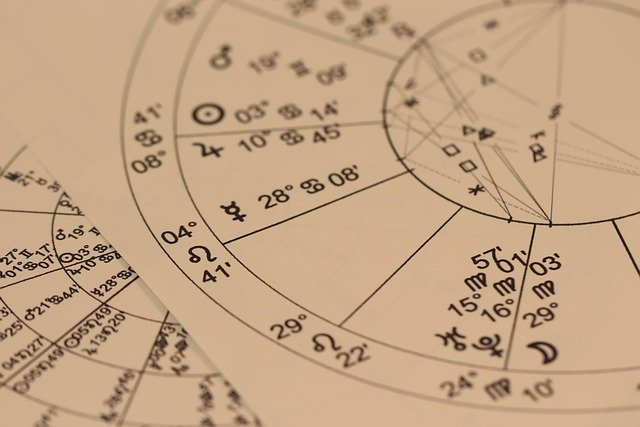
It is a common belief that a person’s sun sign dictates every aspect of their personality. While the sun sign is significant, astrology involves multiple celestial factors, including the moon sign, rising sign, planetary positions, and houses. Reducing someone’s personality to just their sun sign oversimplifies the complex framework that astrology offers. True astrological interpretation considers the entire natal chart, not just the sun sign.
4. Astrology Predicts the Future with Certainty
Astrology is often mistakenly thought to provide precise predictions about future events. In reality, astrology can suggest potential trends, challenges, and opportunities, but it cannot guarantee specific outcomes. The positions of planets and stars may influence energies and tendencies, but free will and personal choices remain critical in shaping life experiences. Astrology is better understood as a guide rather than a definitive roadmap.
5. Astrology is Only About Fortune-Telling
Another common misconception is that astrology is purely about predicting luck or financial success. Astrology encompasses much more, including psychological insights, compatibility analysis, career guidance, and spiritual growth. When approached thoughtfully, astrology can serve as a tool for self-reflection, helping individuals understand patterns in behavior, emotions, and relationships.
6. Astrology Cannot Be Studied Systematically
Some critics argue that astrology is entirely subjective and cannot be studied systematically. While astrology is interpretative, there are well-established principles, such as planetary aspects, zodiac archetypes, and house placements. Astrologers use these principles to analyze charts consistently, providing a structured approach rather than random speculation. However, the accuracy of interpretations depends on the skill and experience of the astrologer.
7. Astrological Signs Limit People
Many people believe that astrology imposes limitations, dictating what a person can or cannot do based on their sign. In reality, astrology describes tendencies rather than restrictions. For example, a Capricorn might have natural inclinations toward discipline and responsibility, but this does not prevent them from being creative or spontaneous. Astrology offers guidance, helping individuals understand potential strengths and challenges, rather than imposing rigid boundaries.
8. Astrology is the Same Across Cultures
Astrology is often assumed to be a uniform system worldwide. In fact, different cultures have developed unique astrological systems, such as Vedic astrology in India, Chinese astrology, and Western astrology. Each system has its own methodology, symbolism, and interpretive frameworks. Understanding these differences is essential to avoid overgeneralization and to appreciate astrology as a diverse and culturally rich tradition.
9. Planetary Retrogrades are Bad Luck
Mercury retrograde, in particular, has gained a reputation for causing misfortune. However, planetary retrogrades are not inherently negative. Retrogrades are periods of reflection, review, and reassessment. While they may coincide with challenges, they also offer opportunities for personal growth, revisiting decisions, and improving communication. Viewing retrogrades as purely unlucky is an oversimplification of their astrological significance.
10. Astrology is Superstition
Critics often label astrology as superstition, dismissing it as irrational belief. While astrology does not conform to scientific validation, it functions as a symbolic system for understanding human behavior, emotions, and relationships. Like art or literature, astrology provides meaning and insight through interpretation, not empirical measurement. For many, astrology is a valuable tool for introspection and self-discovery rather than a literal belief in magical forces.
Conclusion
Astrology is a complex and nuanced practice often misunderstood due to widespread myths and misconceptions. It is not a precise science, nor does it predict the future with certainty. However, astrology can provide valuable insights into personality, relationships, and life patterns when approached with an open and discerning mind. By debunking these myths, individuals can engage with astrology responsibly, appreciating its symbolic richness and potential for personal growth without falling prey to oversimplifications or sensational claims.
Ultimately, astrology is a tool—a guide for reflection rather than a rulebook for life. Understanding its limitations and applications allows people to explore the stars with curiosity, insight, and a balanced perspective.

