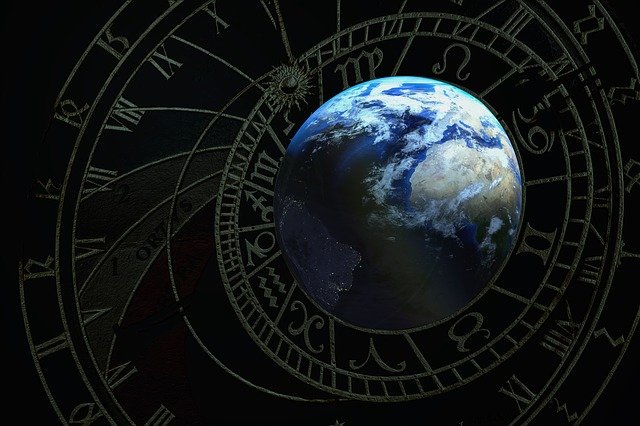
Introduction to Astrology- History and Origins
Table of Contents
Introduction to Astrology: History and Origins
**Astrology** is an ancient practice that explores the relationship between celestial phenomena and human experiences. For millennia, it has been a tool for understanding personality, predicting events, and offering guidance. While often viewed today as a form of entertainment or personal insight, its historical roots run deep, intertwining with science, philosophy, and culture.
The Origins of Astrology
The origins of astrology date back to **ancient Mesopotamia**, around the 3rd millennium BCE. Early astrologers, known as **Chaldeans**, meticulously observed the movements of the sun, moon, planets, and stars. They believed that these celestial bodies influenced the natural world and human destiny. These observations laid the foundation for the development of **horoscopic astrology**, which seeks to relate planetary positions to individual lives.
In Mesopotamia, astrology was closely linked to **astronomy** and religion. Temples often served as observatories, and priests recorded the movements of celestial bodies to interpret omens. This fusion of scientific observation and spiritual belief established a precedent for future civilizations.
Astrology in Ancient Egypt
**Ancient Egypt** further refined astrology around 2000 BCE. Egyptian astrologers developed the concept of **decans**, which divided the sky into 36 sections, each associated with specific stars and deities. These divisions were crucial for predicting **floods of the Nile**, agricultural cycles, and seasonal events.
The Egyptians also contributed to the development of **zodiacal signs**, which would later form a cornerstone of Western astrology. Their belief in the connection between the cosmos and human affairs influenced neighboring cultures, including the Greeks and Romans.
Astrology in Ancient Greece
The Greeks played a pivotal role in shaping astrology as we know it today. Around the 4th century BCE, Greek philosophers like **Pythagoras** and **Plato** began to study the mathematical and philosophical aspects of celestial bodies. They introduced the concept of **personal horoscopes**, suggesting that the positions of planets at the time of a person’s birth could reveal their character and fate.
**Claudius Ptolemy**, a Greco-Egyptian scholar of the 2nd century CE, codified much of Greek astrology in his seminal work, the Tetrabiblos. Ptolemy’s treatise linked the movements of planets to human behavior, offering detailed interpretations that would influence astrology for centuries. His work bridged astronomy and astrology, emphasizing a systematic approach to understanding the cosmos.
Astrology in the Roman Era
During the Roman Empire, astrology became increasingly popular among the elite and general populace. Roman leaders often consulted astrologers before making political or military decisions. **Emperors** such as Augustus reportedly relied on astrologers to guide their choices, blending statecraft with celestial observation.
The Romans also expanded the use of astrology in personal life, providing **daily horoscopes** and integrating zodiac symbols into art and architecture. This period marked a transition from astrology as a scholarly pursuit to a widespread cultural phenomenon.
Astrology in the Middle Ages
With the fall of the Roman Empire, astrology experienced both decline and transformation. During the **Middle Ages**, Islamic scholars preserved and expanded upon Greek and Roman texts. Figures such as **Al-Biruni** and **Avicenna** translated and interpreted works on astrology, linking celestial observations to medicine, philosophy, and mathematics.
In Europe, astrology flourished alongside the rise of universities. It became an essential part of **medical education**, as physicians believed planetary positions influenced health and temperament. Astrological charts were used to determine the most auspicious times for surgeries and treatments.
The Renaissance and Astrology
The **Renaissance** marked a period of renewed interest in astrology, fueled by the revival of classical learning. Astrologers such as **Johannes Kepler** and **Tycho Brahe** combined precise astronomical observation with astrological interpretation, striving to reconcile the scientific and mystical aspects of the discipline.
Astrology during this period was not merely superstition; it was intertwined with emerging scientific inquiry. Courts across Europe employed astrologers to advise kings and nobles, emphasizing astrology’s integration into both intellectual and social life.
Modern Astrology
Today, astrology exists in multiple forms, including **Western**, **Vedic**, and **Chinese** astrology. Western astrology primarily relies on the twelve zodiac signs and the positions of planets relative to Earth at the time of birth. Vedic astrology, rooted in ancient India, emphasizes **nakshatras** (lunar mansions) and karmic cycles. Chinese astrology uses a twelve-year cycle represented by animals, linked to broader cosmological principles.
Despite its widespread popularity, modern astrology is often regarded as **pseudoscience** by the scientific community. Critics argue that there is no empirical evidence to support the predictive claims of astrology. Nevertheless, millions of people continue to find value in it for personal insight, guidance, and reflection.
The Cultural Impact of Astrology
Beyond personal horoscopes, astrology has influenced art, literature, and philosophy throughout history. Zodiac motifs appear in **paintings, sculptures, and architecture**, while literary works often reference celestial symbols to explore human character and fate. Astrology has also shaped **psychology**, particularly through the lens of personality analysis and Jungian archetypes.
In contemporary society, astrology serves as a lens through which people seek meaning and connection. **Horoscope apps, social media posts, and astrology blogs** have made it more accessible than ever, creating a shared cultural experience that spans generations and continents.
Conclusion
The history of astrology is a testament to humanity’s enduring fascination with the cosmos. From **ancient Mesopotamia** to modern digital platforms, astrology has evolved while retaining its central premise: that the universe and human life are interconnected. Whether regarded as a spiritual guide, a cultural artifact, or a psychological tool, astrology continues to inspire curiosity, reflection, and wonder.
Understanding its **origins and historical development** allows us to appreciate astrology not merely as superstition but as a rich tapestry of human thought, observation, and imagination that has endured for thousands of years.