Soulmates and astrology- Fact or fiction?
Table of Contents
Soulmates and Astrology: Fact or Fiction?
For centuries, humans have sought answers to the mysteries of love and destiny. Among these, the concept of soulmates has captivated the imagination of poets, philosophers, and ordinary people alike. Similarly, astrology has provided a framework for understanding personality traits, compatibility, and life paths based on celestial movements. But how much of this is rooted in reality, and how much is a beautiful myth? In this article, we will explore the intersection of soulmates and astrology, examining whether these ideas are fact, fiction, or something in between.
The Idea of Soulmates
The term soulmate typically refers to a person with whom one has a profound, almost predestined connection. This idea appears in various cultures and spiritual traditions:
- In Greek philosophy, Plato suggested in his work The Symposium that humans were originally created as beings with two faces, four arms, and four legs. According to this myth, humans were split in half, and each person spends their life searching for their other half – their soulmate.
- In Eastern traditions, such as Hinduism and Buddhism, the concept of karmic connections implies that certain relationships transcend lifetimes, linking souls across reincarnations.
- Modern Western culture often romanticizes the idea of a soulmate as the “perfect match” who completes one’s life.
But what makes someone a soulmate? Is it a shared interest, chemistry, emotional depth, or something more metaphysical? While science cannot measure metaphysical connections, studies in psychology suggest that the feelings associated with soulmates often stem from deep compatibility and mutual understanding. Yet, the mystical allure persists, particularly when astrology is introduced.
Astrology and Compatibility
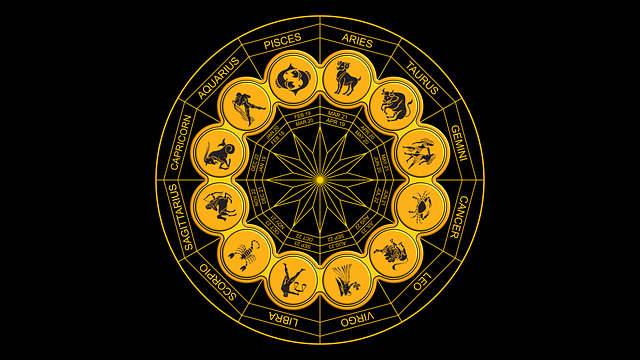
Astrology is the study of celestial bodies and their influence on human life. Dating back thousands of years, astrology claims that the positions of stars and planets at the time of one’s birth shape personality, tendencies, and even destiny. The modern Western zodiac consists of 12 signs, each associated with specific characteristics and compatibility patterns.
Proponents of astrology argue that certain signs naturally complement each other:
- Aries and Libra: Aries’ fiery energy can balance Libra’s diplomacy.
- Taurus and Scorpio: Taurus’ stability matches Scorpio’s intensity.
- Gemini and Sagittarius: Both signs value exploration and adaptability.
Astrology enthusiasts often claim that discovering a soulmate involves more than just shared interests; it requires analyzing natal charts, planetary alignments, and moon signs to determine a cosmic bond. Many people report feeling an immediate connection with someone whose astrological profile complements their own, reinforcing the belief that celestial forces play a role in relationships.
The Science Behind Soulmates
From a scientific perspective, the concept of a predestined soulmate is difficult to prove. Psychology and neuroscience suggest that what people perceive as “soulmate chemistry” can be explained through:
- Attachment theory: Humans form strong emotional bonds with those who provide security, understanding, and empathy.
- Similarity and shared values: Studies show that couples with aligned values, goals, and personality traits tend to have longer-lasting relationships.
- Neurochemistry: Feelings of passion and connection are influenced by hormones like dopamine, oxytocin, and serotonin.
These findings suggest that a soulmate connection might be less about destiny and more about compatibility and mutual reinforcement of positive emotional experiences. The idea of a mystical “perfect match” may be appealing, but it is difficult to substantiate through empirical evidence.
Astrology: Myth, Science, or Art?
Astrology straddles the line between art and pseudoscience. While astrologers meticulously chart the positions of planets and stars, rigorous scientific studies have found little evidence that zodiac signs or planetary alignments have a measurable effect on personality or romantic compatibility.
Nevertheless, astrology can offer value:
- Self-reflection: Reading astrological charts encourages introspection about one’s strengths, weaknesses, and relationship patterns.
- Conversation starters: Astrology can facilitate discussions about personal values, preferences, and emotional needs.
- Framework for compatibility: For those who believe, astrology provides a symbolic way to explore relational dynamics.
Whether astrology is “true” in a scientific sense or not, it has undeniably influenced how people understand and interpret their romantic lives. For believers, the zodiac can feel like a cosmic guide pointing toward their soulmate; for skeptics, it is a poetic tool for self-awareness.
Psychological and Cultural Influences
The belief in soulmates is deeply embedded in cultural narratives. Movies, literature, and social media reinforce the notion of a perfect, predestined partner, creating a psychological expectation that one must find this ideal connection. Astrology often amplifies this expectation by suggesting that the stars themselves are orchestrating the search for love.
Psychologists caution that an overreliance on the concept of soulmates can have downsides:
- Unrealistic expectations: Believing in a single “perfect” partner may lead to disappointment and difficulty sustaining real-world relationships.
- Confirmation bias: People may interpret coincidences in astrology or dating as evidence of a cosmic connection, reinforcing preexisting beliefs.
- Relationship stagnation: The pursuit of a mystical soulmate can distract from building meaningful partnerships based on communication, empathy, and effort.
The Middle Ground: Fact, Fiction, and Symbolism
So, are soulmates and astrology fact or fiction? The answer may lie somewhere in between. While there is no empirical proof that a mystical soulmate exists or that the stars dictate love, both concepts serve symbolic and psychological purposes:
- Soulmates: Represent the ideal of deep emotional compatibility, guiding individuals toward meaningful, mutually fulfilling relationships.
- Astrology: Offers a narrative framework for self-reflection, personal growth, and understanding relational dynamics.
In this sense, the “truth” of soulmates and astrology is less about scientific validation and more about personal meaning. The human desire to believe in destiny and cosmic order reflects a deeper longing for connection, understanding, and love.
Practical Takeaways
Even if the mystical claims of soulmates and astrology are taken with a grain of salt, they can provide practical benefits:
- Use astrology as a tool for self-reflection, identifying personal strengths, challenges, and relationship preferences.
- Recognize that emotional compatibility, shared values, and communication are the real foundations of lasting love.
- Enjoy the romance of soulmates as a symbolic ideal, but remain open to the reality that love often requires effort, compromise, and growth.
- Be mindful of cultural and psychological influences on romantic expectations, fostering a healthy perspective on relationships.
Conclusion
The ideas of soulmates and astrology continue to captivate hearts and minds because they speak to universal human desires: the longing for deep connection, understanding, and purpose. While there is little scientific evidence to confirm a predestined soulmate or the predictive power of astrology, both concepts serve as meaningful symbols, guiding self-discovery and relationship exploration.
Ultimately, whether fact or fiction, soulmates and astrology remind us of the wonder, mystery, and complexity of love. They encourage reflection, emotional growth, and a playful engagement with the cosmic story of our lives. Perhaps the truest “soulmate” is not dictated by the stars or fate, but discovered in the shared journey of two people striving to understand, support, and inspire each other.
In the end, the debate between science and mysticism may be less important than the connections we cultivate, the love we share, and the meaning we create in our lives – and maybe that is the most enchanting truth of all.